
SESSION XIII: Rafael Moneo


21 st century architecture, and indeed society, favor the bold, grand gestures as found in gravity-defying buildings and eye-catching structures. Form truly trumps function in a dopamine centric society founded in the digital age. From an architectural standpoint and regarding what is commonly recognized as “great”, a
building’s potential greatness should not be exclusively found in its exterior image
or stylistic tendency.

Rafael Moneo, one of the greatest 20th -21st century architects and scholars, demonstrates architectural value, not by creating excitingly imposing buildings, but through a sensible approach towards historic and geographic contexts, giving close thought to materials and textures throughout the process. In this way, even if it meant parting from his visual signature style, Moneo was able to attend each project with a specific manner, as with the National Museum of Roman Art and the Kursaal.
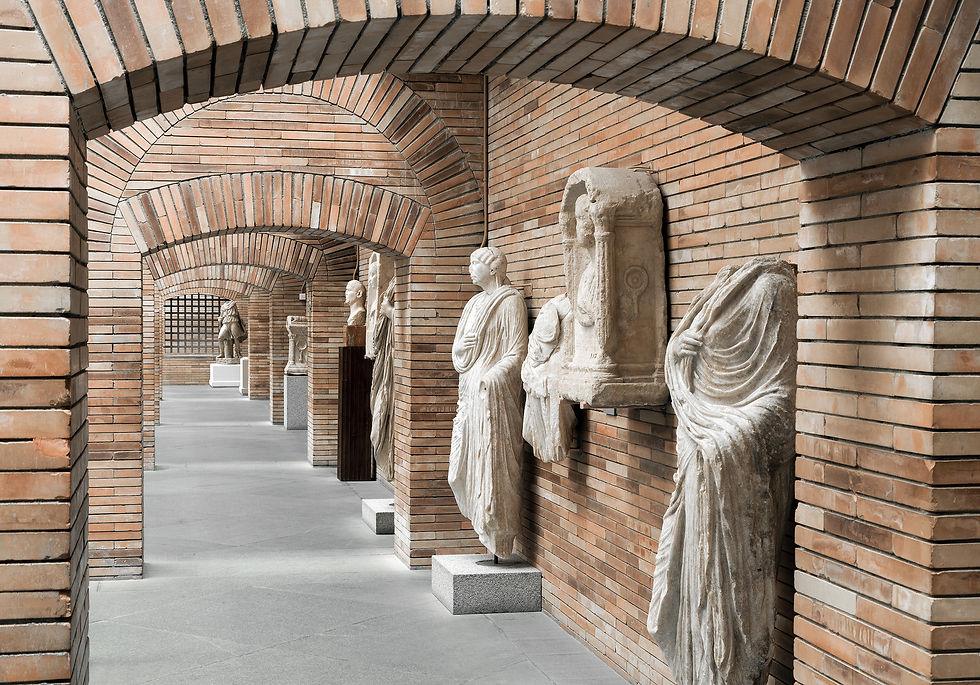
Built between 1981 and 1985, the National Museum of Roman Art is both an architectural and historic homage to the Roman city of Mérida, located in Spain. The ruined city, which still stands, including aqueducts, bridges, and even a Roman theater, became a literal canvas for Moneo’s design: the city’s original ruins not only dictated the structure’s plan, but were also used to source the bricks used in the building. Although a museum, the colossal scale of its interior pays homage to the Roman Empire’s tradition of grandiose design. He invokes images of the Pantheon and Roman Colosseum through his use of arches to create wide corridors. Moneo fuses past and present by implementing homages in his works as well as sourcing materials in line with the ruins of the city.


Kursaal, an auditorium and convention center in San Sebastián, Spain, is another of Moneo’s best architectural projects to date. Comprised of two main volumes, one larger than the other, the complex was visualized as a geological intervention in current modern reality. This fact is supported by the relationship between the cubes, both in terms of scale and position (at an angle), and their slanted faces, depicting natural geological formations.
The building’s greatest achievement is it's transparency, irrevocably connecting it to its natural surroundings. Thanks to its textured glass, the building obtains contrasting qualities during the day and night: during day, a flood of light ensues; during night, a floating paper lantern can be seen from the outside looking in. Kursaal blurs the lines between natural and man- made structures, an effect only accomplished by throwing away current urban themes.
Both examples mentioned fail to follow a strict design movement; as is to be
expected from Moneo, this is intentional. Moneo prioritizes the past, be that the
preceding nature in the area or the human element that permeates the history of the
environment; Projects are tightly woven and spun from cities themselves, rather
than an architectural imposition on a previous landscape. Evidently, the past is the
force that ultimately shapes his buildings, although not in an outdated way. Both
through abstraction and the continuation of cultural and natural melodies in his
designs, the Spanish architect can reflect, a timelessness that challenges existing
architectural and stylistic trends.
References:
Conferencia Magistral de Rafael Moneo en la XX Bienal de Arquitectura de Nuevo León. (2020, January 02). Retrieved December 02, 2020, from https://www.youtube.com/watch?v=Bhut01ulC5A
Belogolovsky, V. (2020, March 04). Rafael Moneo believes good architecture must be innovative but rooted in its place. Retrieved December 02, 2020, from https://www.stirworld.com/think-columns-rafael-moneo-believes-good-architecture-must-be-innovative-but-rooted-in-its-place
Netto, D. (2013, April 12). Lost in Translation. Retrieved December 02, 2020, from https://www.nytimes.com/2013/04/12/t-magazine/lost-in-translation.html
Elogio de la luz - Rafael Moneo, coraje y convicción. (2013, January 03). Retrieved December 02, 2020, from https://www.rtve.es/alacarta/videos/elogio-de-la-luz/elogio-luz-rafael-moneo-coraje-conviccion/1525590/


Comments